
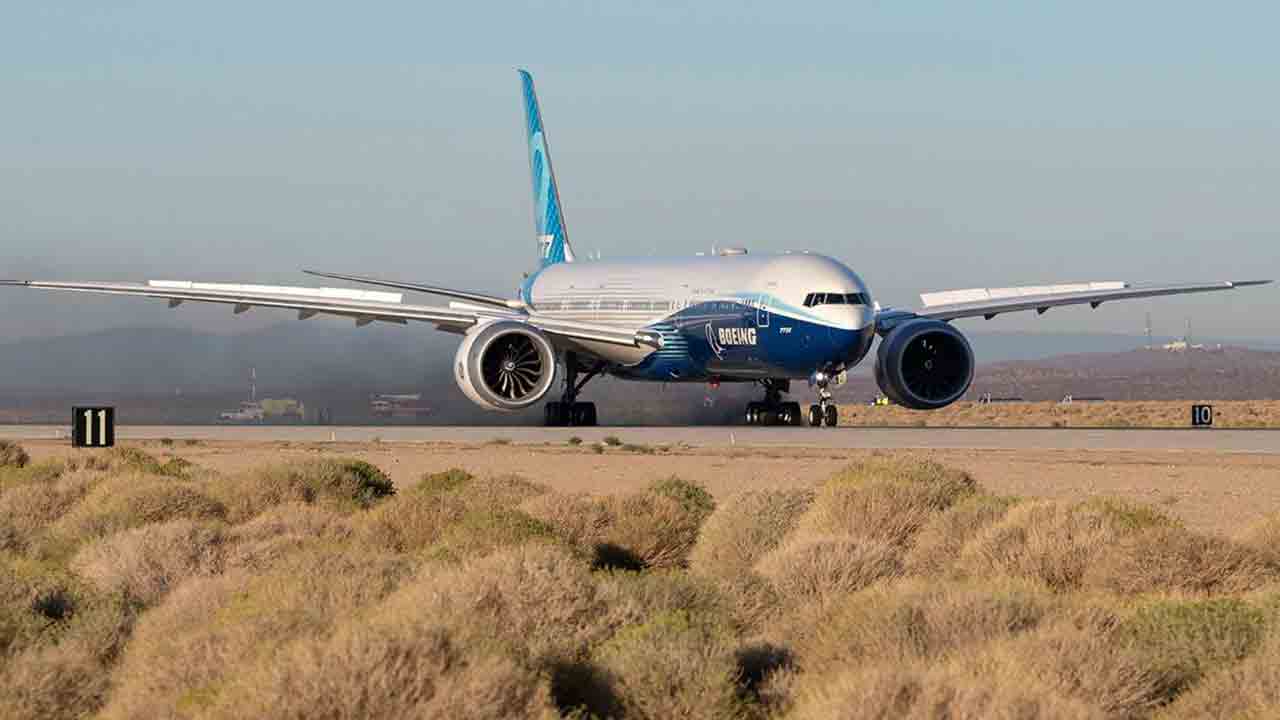
Boeing’s new long-haul aircraft underwent a rejected takeoff under the worst possible scenario, with worn brakes, maximum weight, and temperatures above 1,370 °C
Boeing announced that the 777-9 has successfully completed one of the most demanding stages of its certification program: the maximum brake energy test, a mandatory procedure designed to prove that the aircraft can stop safely even in a critical situation during the takeoff roll.
In the test, the aircraft was loaded to its maximum takeoff weight of around 350 tons and accelerated to approximately 190 knots before simulating a rejected takeoff. The goal is to reproduce one of the most severe scenarios an aircraft can face, such as a sudden engine failure moments before leaving the ground.
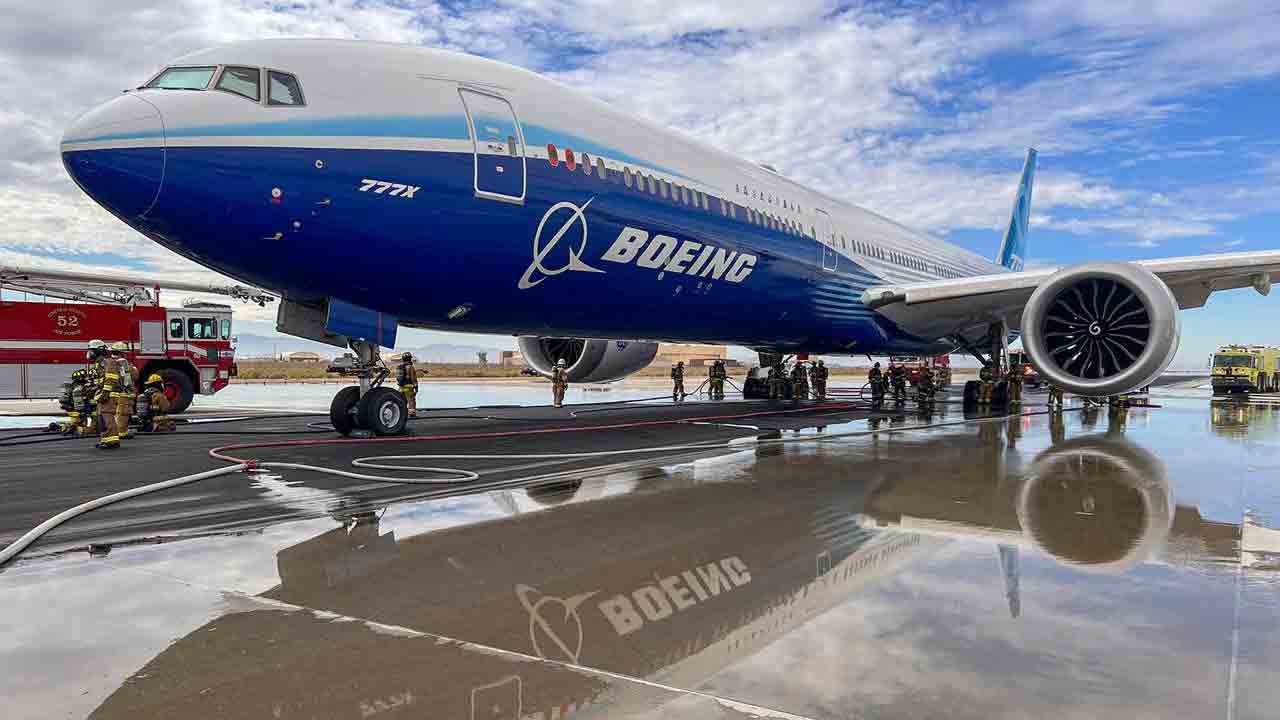
According to Boeing, the test was carried out under conditions deliberately pushed to the limit. The brakes used were in their most worn condition, precisely to represent the worst-case scenario. During braking, temperatures exceeded 1,370 degrees Celsius, causing extreme heating of the wheels.
As a result, the wheel fuse plugs were activated to release tire pressure. This mechanism exists to prevent the tires from exploding due to overheating, which could damage the aircraft or create additional risk during a possible passenger evacuation.
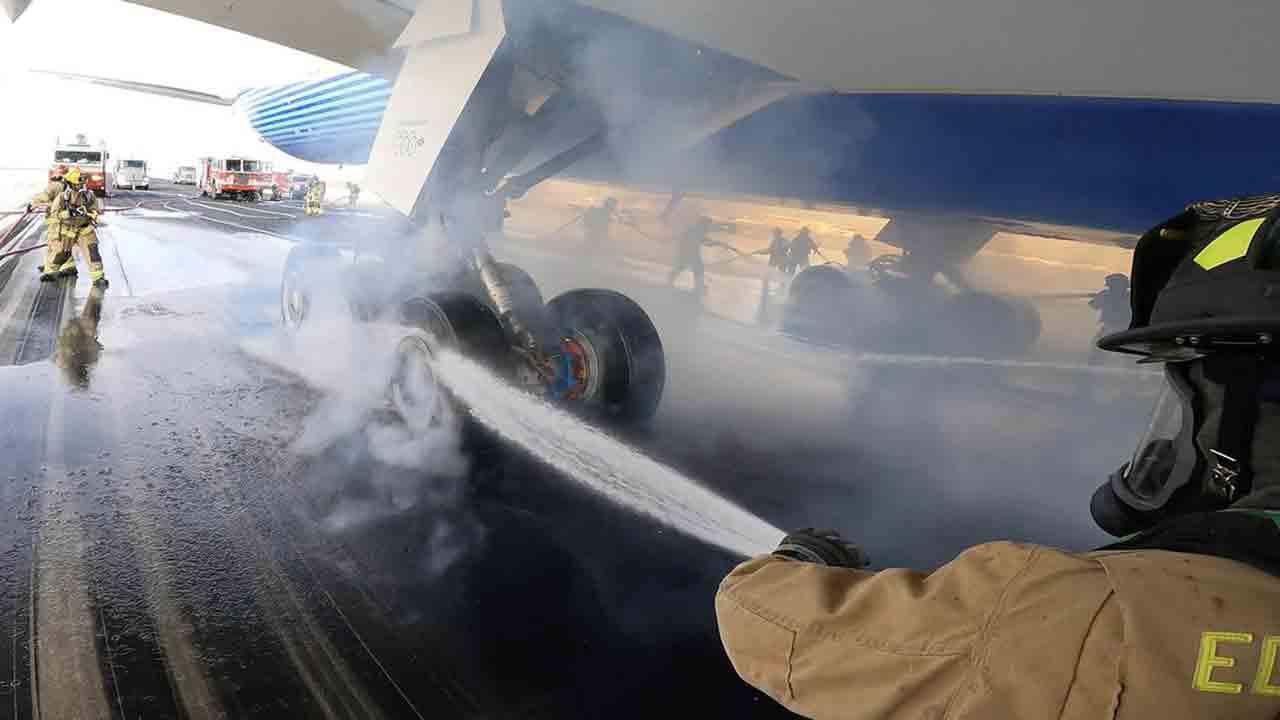
This type of evaluation is part of the certification process conducted by Boeing together with the FAA, the United States civil aviation authority. The purpose is to demonstrate that, even in a rejected takeoff under the most severe conditions, the airplane can still stop safely within the runway.
According to the program team, the test was completed without any anomalies, marking another major step forward in the development and certification of the 777-9.
Photos and videos: Boeing. This content was created with the help of AI and reviewed by the editorial team.
